
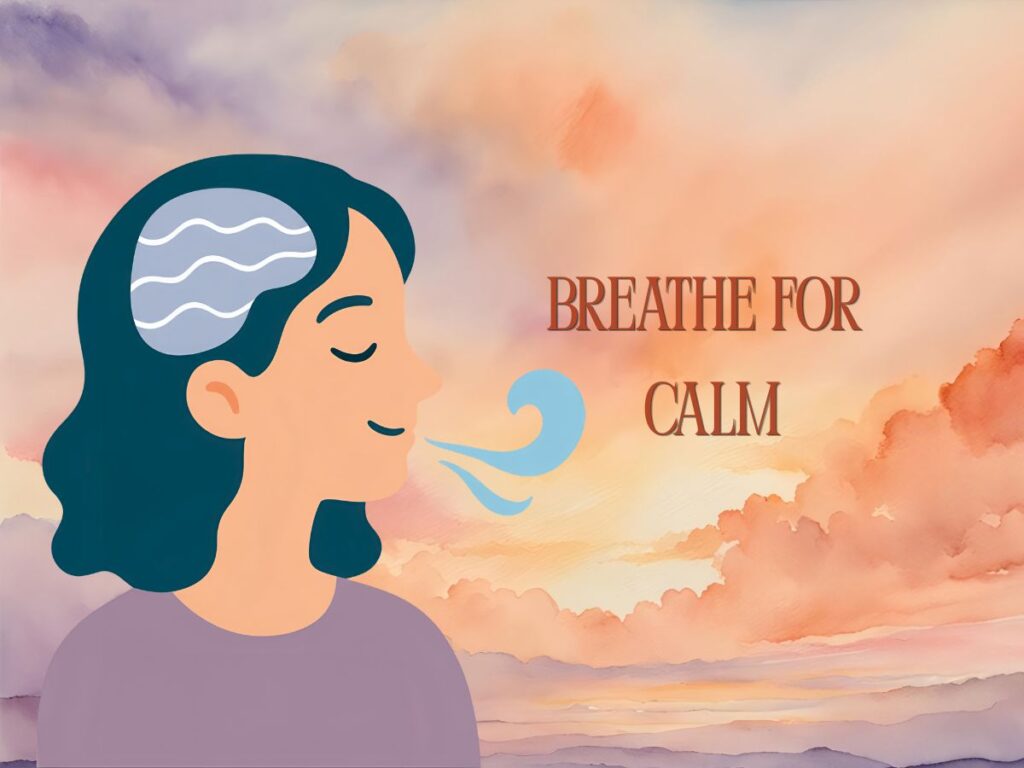
One of the most powerful tools we have to calm anxiety is something we do every moment of every day, and that is breathing.
Breathing is unique because it’s one of the few body functions that is both automatic and under our conscious control.
When we are anxious or stressed, our breathing often becomes fast, shallow, and centred in the upper chest.
This signals to our brains that we are under threat, which causes our sympathetic nervous systems activate our fight, flight or freeze response.
By consciously slowing and deepening our breathing, we can activate our parasympathetic nervous systems, and our bodies can move back into a state of rest and digest.
In essence, we can use our breath to send a message to our brain that we are safe.
It’s important to remember that breathing techniques don’t eliminate the source of stress, but they can reduce how our bodies respond to stress response. When we respond better it becomes easier to think clearly, to regulate our emotions, and to make better decisions.
Some of the different breathing techniques we can use are:
- Diaphragmatic breathing
- Box breathing
- 4-6-8 method
- Physiological sigh
Diaphragmatic or belly breathing
This is the foundation of calm breathing.
Place one hand on your chest and the other on your abdomen. As you inhale through your nose, allow your abdomen to rise while keeping your chest relatively still. Then exhale slowly through your mouth or nose, allowing your abdomen to fall.
Aim for about six slow breaths per minute if it feels comfortable. Even just five minutes of diaphragmatic breathing can lower heart rate, reduce muscle tension, and promote relaxation.
Box Breathing
This technique is widely used to help people remain calm under pressure.
The technique follows four equal counts:
- Inhale for 5 seconds.
- Hold for 5 seconds.
- Exhale for 5 seconds.
- Hold again for 5 seconds.
Repeat for several cycles. The steady rhythm helps quiet a racing mind while improving focus.
The 4-6-8 breathing technique
One of the simplest ways to calm the nervous system is to make your exhale longer than your inhale.
Breathe in gently through your nose for a count of four, hold for the count of 6, then breathe out slowly for a count of eight.
The longer exhalation stimulates the vagus nerve, encouraging the body to relax. The important principle with this technique is that the exhale is slightly longer than the inhale.
Physiological sigh
This is one of the quickest ways to reduce acute stress.
Take a deep breath in through your nose, then before exhaling, take a second smaller inhale to fully expand the lungs. Then exhale slowly and completely through the mouth.
Repeating this just two or three times can rapidly reduce feelings of anxiety by helping to release excess carbon dioxide and restore a more balanced breathing pattern.
Practical tips to applying these techniques are:
- Practise these techniques when you’re already calm so they become familiar during stressful moments.
- Don’t force very deep breaths, as over-breathing can sometimes make dizziness or anxiety worse.
- Even one or two minutes of slow breathing can make a noticeable difference.
- Pair your breathing practice with good sleep, regular physical activity, and mindfulness for even greater benefits.
Our breath is always with us.
We may not always be able to control what is happening around us, but we can influence how our bodies respond to it. Every slow, intentional breath tells our nervous systems that we are safe.
Over time, these small moments of calm can build greater resilience to life’s daily stresses.
The next time you feel overwhelmed, remember to pause, breathe slowly, and let your breath become your anchor.
Listen to my interview with Reggie Booysen from Radio Cape Pulpit on 16 July 2026 to learn more. Listen to my next interview on Thursday at 7.45am.